Document storage costs are greater than ever. Poor storage management and failure to stay compliant can result in fines up to £17.5 million or 4% of a business’ total annual revenue.
Not only is storing physical documents a complicated intricate process, it also requires time, effort and money. Companies must retain their documents for up to 6 years or longer according to regulations.
With factors such as inflation, compliance and rising operational costs, managing and storing documents effectively, comes at a great price.
If you’re looking to cut down on document storage costs without sacrificing accessibility or security, you’re in the right place! In this blog, we’ll walk you through 6 powerful and practical strategies to achieve just that.
Here are the 6 ways to decrease your document storage costs:
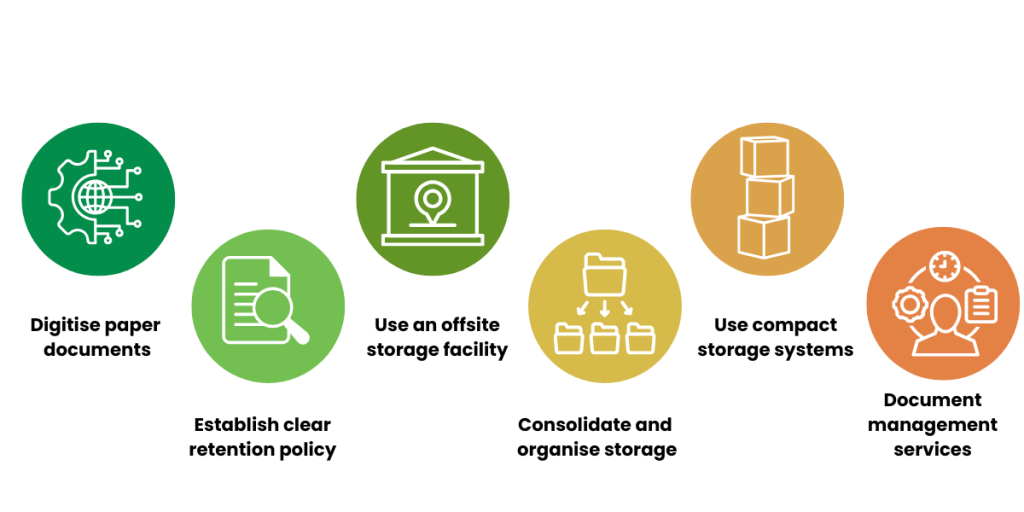
With these strategies you can keep your documents safe and your budget paper-thin with smart storage solutions!
1. Digitise paper documents to minimise space costs
Storing a large number of documents in your office requires a significant amount of space, which can limit the room available for other important functions and increase your overall office costs.
Document digitisation can help free up space and reduce your office rental costs. Since you won’t require all the additional space used to store many documents, you’ll be able to operate in a smaller office space.
However, given the high rates of data breaches and hacking incidents, it’s a good idea to keep physical backup copies of important documents. This can be a cost-effective safeguard, ensuring you don’t lose critical information if a server fails or digital data is lost.
While document digitisation can help you save space, physical backup copies can help you save more money in the long term by keeping important documents secure.
2. Establish a clear document retention policy
Storing unnecessary or outdated documents can increase your costs without adding any value.
This is why it’s important to have a clear retention policy in place for your documents, so you can keep track of how long they are stored for and avoid the costs of maintaining documents you no longer need.
Simple processes to have in your retention policy include establishing a life cycle (active, inactive and disposition phase) and creating a secure destruction process, such as shredding.
By determining a documents life cycle you will keep better track of your documents, how long they’ll be in storage for and when they should be archived or destroyed.
Ultimately, retention policies help you stay compliant and save money by optimising your storing processes.
Did you know our online portal takes care of this for you? By providing you with notifications on when your records are due for destruction, it ensures you are always complying with the relevant rules and regulations.
3. Utilise offsite storage
Offsite storage can be a more cost-effective option than onsite, especially for businesses that handle large volumes of documents and records. This is common in sectors like healthcare, where maintaining vast amounts of information is necessary
By using offsite document storage you save money otherwise spent on securing and managing your documents in-house. Retrieval services provided by document storage providers, will additionally help you reduce time spent looking for files.
Offsite storage is especially great for archived documents, as you are able to store documents you may not actively be using but must keep inline with regulations. By keeping these in an offsite storage facility, you’ll maintain your documents secure, organised and accessible with easy retrieval processes.
4. Consolidate and organise storage
Disorganised storage can lead to inefficient management of documents and records, potentially leading to additional costs.
You can consolidate and organise your storage by establishing a centralised storage location. Whether this is onsite storage or offsite, by having a dedicated space you can save by combining and storing all your documents into one location instead of many different scattered ones.
This will ultimately help you have your documents in a designated space where they are well categorised, organised and easily accessible.
Did you know at Kelly’s we have helped many businesses manage their documents in an organised, simple manner. With a simple online portal and barcodes on each box or file, businesses are able to easily and effortlessly manage, retrieve and track their documents.
5. Maximise storage space with compact systems
Inefficient storage systems waste valuable space and money. This can be resolved by using advanced solutions and techniques that allow you to store more items in smaller spaces.
Compact systems with deeper drawers also allow for high-density file storage. Stackable boxes are more space efficient and easily organised.
Additionally, vertical storage uses the full height of a room to store your documents. Making the most of available storage space.
Ultimately, using effective compact storing and filing solutions, you can save money spent trying to find additional spaces for storage.
6. Outsource document management services
In-house document management is time consuming and costly. By outsourcing document management services you can reduce the costs of having to appoint many different functions to different providers.
Instead you can find a document management service that does it all for you, a far more cost-effective option. Outsourcing a valuable provider like this will help you reduce labour costs and improve efficiency, by saving on the time spent on tasks which would be otherwise divided among personnel.
Did you know at Kelly’s we provide a range of records management services – from storing and scanning, to office relations and shredding.
Conclusion
To conclude here’s a list of how each of these ways can help you reduce your document storage costs:
- Digitalisation: Save money on space, but don’t forget to keep a backup physical copy just in case.
- Retention Policy: Save by optimising what you’re storing and minimising possession of unnecessary documents.
- Offsite storage: Save on securing and managing your documents.
- Consolidate space: Save on space by having a designated location instead of many separate ones.
- Compact systems: Save by maximising capacity of storage allowing for more effective storing.
- Document storage provider: Save on time and labour by having one provider covering a range of services.
Ultimately, the 6 ways mentioned in this blog, if implemented correctly will help you save space, time, effort and money!
Here's how we can help:
- We offer a range of services, while we love physical document storage we also do scanning!
- We barcode and scan all your documents so you can retrieve any file you’ve stored with us at any time.
- We provide affordable storage, charging low rates per document storage box.
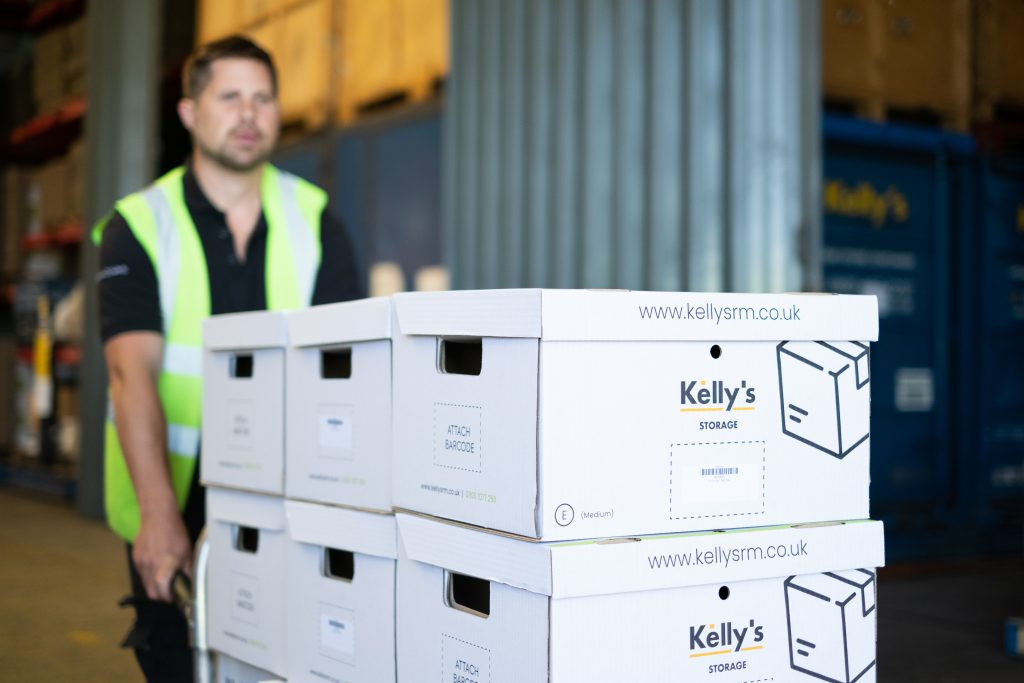
- We are masters at stacking our sturdy boxes in our warehouse, all of which are scanned, and easily accessible.
- Not to forget the range of services we cover: storage, scanning, shredding, tape, will and deed storage, vault storage, IT asset disposal, office relocation and business storage!
- We also appoint you a dedicated account manager, so you can get all the help you need with any processes you have in mind.
Unlock smarter, cost-effective document storage now
tailored to your needs.